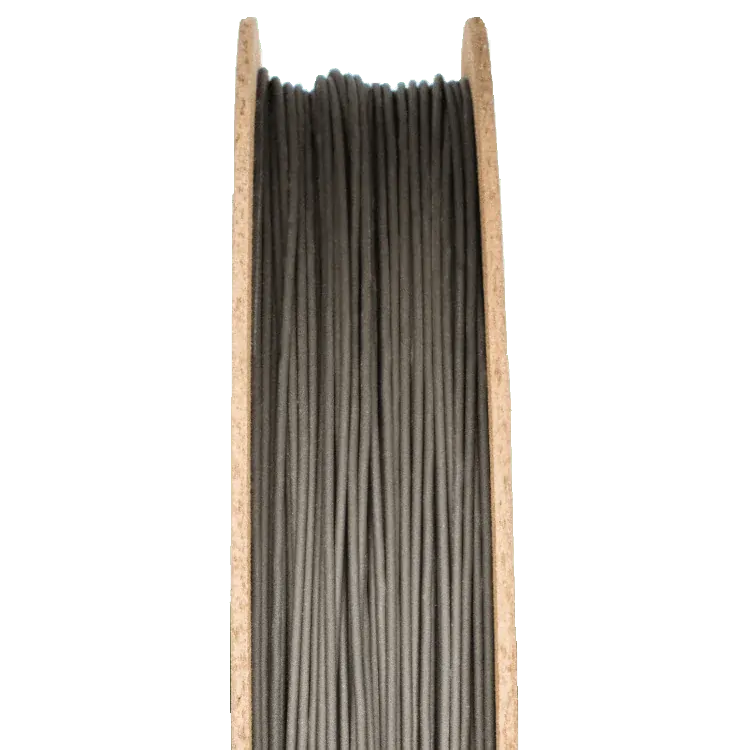
Basalt Moon Dust Filamet™ — 1.75 mm, 0.5 kg
or 4 payments of $224.75 with
 Info
Info
Reseller, Corporate or Goverment Buyer?
Government and Education
3DPrintergear has been supplying government organisations with 3D printers, services and support since 2012. As an approved government customer you will automatically be entitled to 30-day terms with an official purchase order.
If you would like to create an account, please contact us on 1300 334 327, or at admin@3dprintergear.com.au
Resellers
Want to become a reseller?
3DPrintergear offers special pricing to genuine resellers. Once your application is approved, your new buying prices will be shown on our website after you login. To apply for a resellers account please contact us at admin@3dprintergear.com.au
Your Order Qualifies for Free Shipping! - FREE
Your order will be shipped by the most economical option, with online tracking. Delivery is usually 2-7 business days.
Free Pick-Up From Store - FREE
- Photo ID Required For All Pickup Orders
- Free pick-up from '781 High St, Reservoir VIC 3073', during opening hours
- Call Us 1300 334 327 if Urgently Required
- Express Dispatch
- Australian Owned & Operated
- Money Back Guarantee
- Quality Assured Products
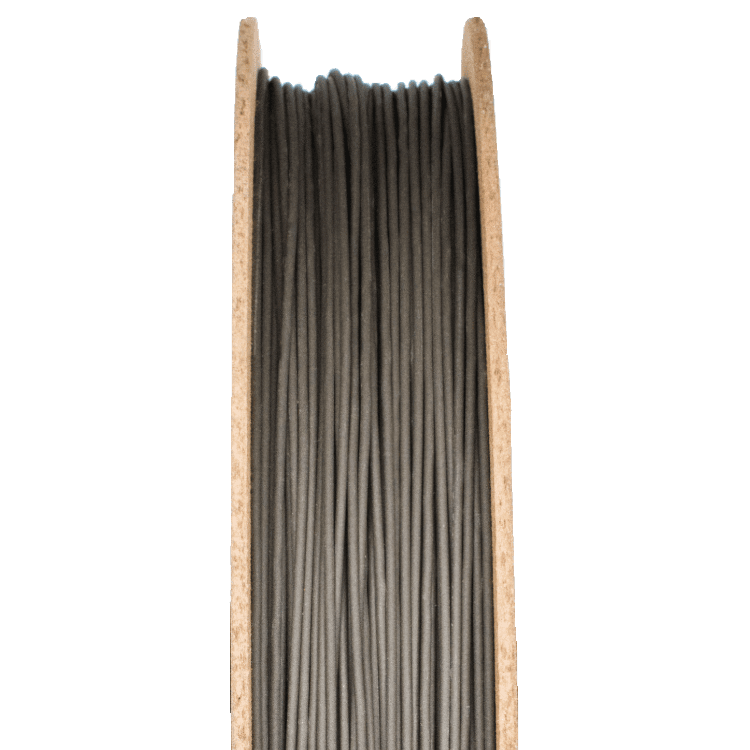
Print with the closest terrestrial analogue to lunar and Martian soil
Basalt Moon Dust Filamet™ loads 60–62% terrestrial basalt — mineralogically the closest readily available analogue to lunar mare and Martian surface regolith — into a printable polymer matrix. Aerospace research groups use basalt simulants to model how off-world construction, sintering and ISRU processes will behave when the only available feedstock is the dust under the lander.
From NASA-affiliated university programs to ESA collaborators and private lunar habitat startups, basalt simulant is the standard test material for prototyping habitats, landing pads, radiation shields and tooling that must one day be built from regolith on the Moon or Mars. With Filamet™ that workflow runs on FDM hardware that fits on a graduate student’s desk.
How it works — the 4-step process
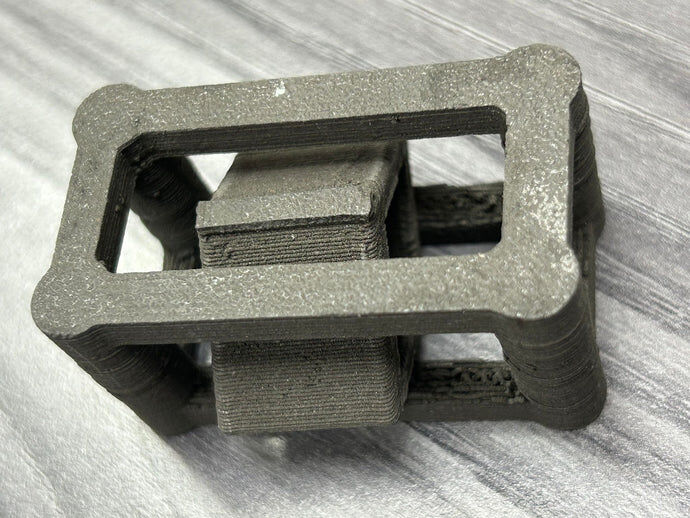
Print on any FDM printer with a 0.6 mm hardened steel nozzle. Basalt-loaded extrusion produces a deep volcanic-black geometry rich in fine mineral texture.
Pack
Nest the green part in alumina ballast inside an alumina crucible — the standard burnout setup that protects geometry as the polymer escapes.
Sinter
Fire in a programmable kiln to fuse the basalt particles into a vitrified, dark stone-like body — analogous to thermal regolith consolidation studies in the literature.
Test
Characterise mechanical, thermal or radiation properties for ISRU research. Expect ~15–20% linear shrinkage — scale models up ~120–125%.
Why basalt for space research
Lunar mare analogue
Lunar mare regolith is dominantly basaltic — basalt simulants are the established stand-in for habitat, landing-pad and shielding R&D.
Martian surface stand-in
Mars surface mineralogy includes large basalt fractions — basalt-loaded prints are widely used for ISRU and habitat-construction simulation.
ISRU prototyping
In-Situ Resource Utilisation studies need printable test articles that mimic regolith chemistry. Filamet™ turns basalt into a CAD-driven workflow.
University-supported
TVF actively supports university and NASA-affiliated research programs running this material — technical support is available for academic groups.
Stone-like fired body
Once sintered, basalt vitrifies into a dense, dark, stone-like ceramic — visually and structurally evocative of fused regolith demonstration parts.
USA-made, fully supported
Manufactured in South Central Wisconsin by The Virtual Foundry. Direct technical support for research, education and aerospace customers.
Recommended print settings
Specifications
Printing tips
- Basalt is abrasive — hardened steel nozzle is mandatory
- Filawarmer recommended for prints over 4 hours
- Direct drive preferred for cleaner extrusion at higher mineral loading
- Document your sinter profile — the ISRU community shares schedules
Common applications
- Lunar habitat construction research and demonstrators
- Mars surface architecture and ISRU studies
- Landing-pad and shielding-tile prototypes
- Planetary-geology teaching collections
- University and NASA-affiliated space programs
- Outreach and museum demonstrators
What you can make


Frequently asked questions
What else you’ll need
TVF FireX Sintering Kiln
Programmable kiln engineered for the full Filamet™ range — develop your basalt vitrification profile with full schedule control.
Other Ceramic Filamets
Porcelain, zirconium silicate and silicon carbide round out the ceramic range — useful baselines for comparative ISRU studies.
Made in South Central Wisconsin, USA. World-class technical support provided for all TVF products.
(TVF-FILAMET-BASALT-175)
| SKU | TVF-FILAMET-BASALT-175 |
| Brand | The Virtual Foundry |
| Shipping Width | 0.220m |
| Shipping Height | 0.080m |
| Shipping Length | 0.220m |
Be The First To Review This Product!
Help other 3DPrintergear users shop smarter by writing reviews for products you have purchased.