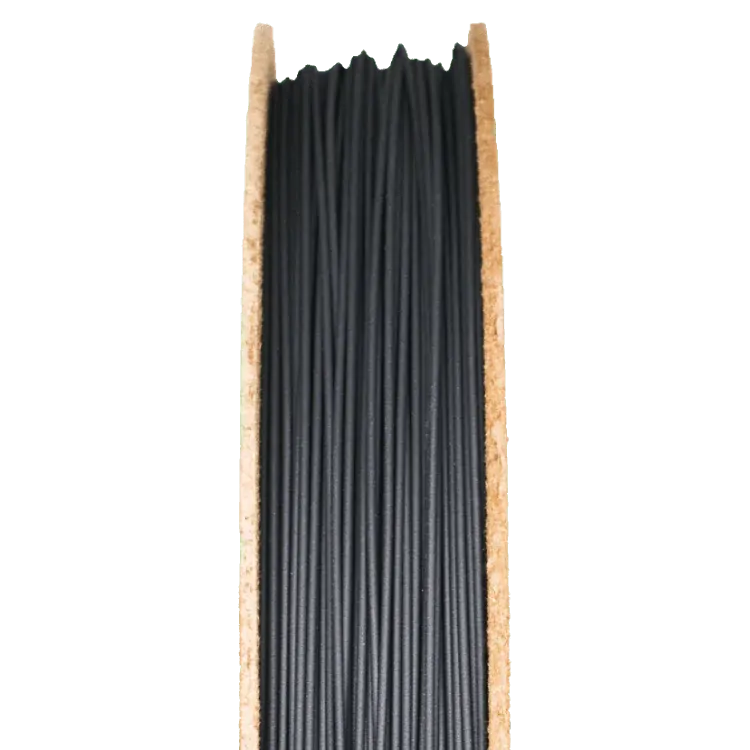
Rapid 3DShield™ Boron Carbide — 1.75 mm, 0.5 kg
or 4 payments of $112.87 with
 Info
Info
Reseller, Corporate or Goverment Buyer?
Government and Education
3DPrintergear has been supplying government organisations with 3D printers, services and support since 2012. As an approved government customer you will automatically be entitled to 30-day terms with an official purchase order.
If you would like to create an account, please contact us on 1300 334 327, or at admin@3dprintergear.com.au
Resellers
Want to become a reseller?
3DPrintergear offers special pricing to genuine resellers. Once your application is approved, your new buying prices will be shown on our website after you login. To apply for a resellers account please contact us at admin@3dprintergear.com.au
Your Order Qualifies for Free Shipping! - FREE
Your order will be shipped by the most economical option, with online tracking. Delivery is usually 2-7 business days.
Free Pick-Up From Store - FREE
- Photo ID Required For All Pickup Orders
- Free pick-up from '781 High St, Reservoir VIC 3073', during opening hours
- Call Us 1300 334 327 if Urgently Required
- Express Dispatch
- Australian Owned & Operated
- Money Back Guarantee
- Quality Assured Products
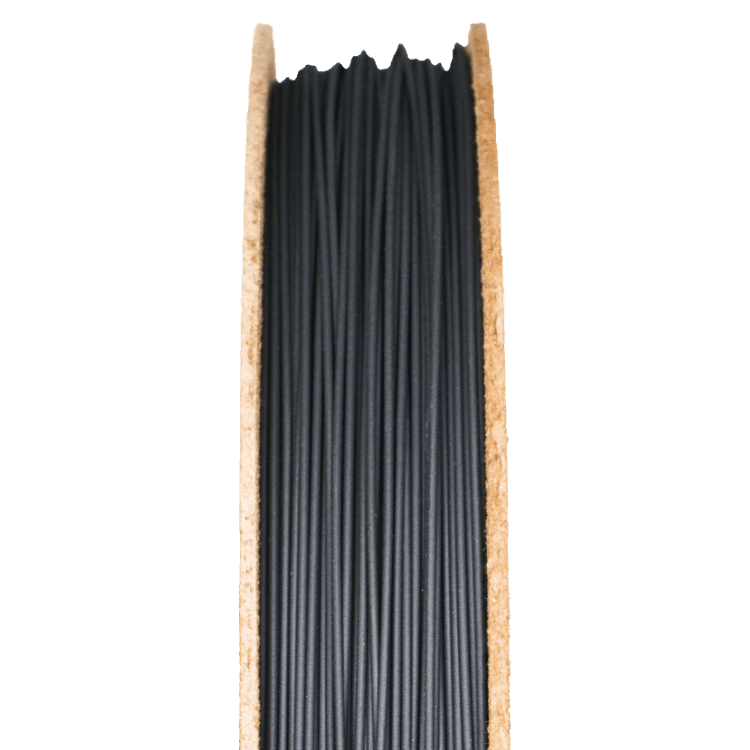
Print custom neutron shielding geometry on your desktop FDM
Rapid 3DShield Boron Carbide is unlike every other Filamet™ in the TVF range — it is engineered to be used as printed. No kiln, no sintering, no shrinkage compensation. The boron carbide is loaded into a printable polymer matrix at 50–60% by weight so the finished print already contains enough boron-10 nuclei to perform as a thermal neutron absorber the moment it leaves the build plate.
Boron carbide (B4C) is the standard material for thermal neutron absorption — it is what fills nuclear control rods, lines reactor shielding, and protects spent fuel containers. It is also one of the hardest materials known, ranking just behind diamond and cubic boron nitride. With 3DShield you can prototype shielding geometry, beam collimators and detector housings in hours instead of weeks — on the FDM printer you already own.
How it works — the 4-step shielding workflow
Design
Model your shield, collimator or detector housing at full final size — no shrinkage compensation needed because there is no sintering step.
Print on any FDM printer with a 0.6 mm hardened steel nozzle. Use 100% infill for maximum boron-10 density — gaps reduce shielding effectiveness.
Skip Sintering
Do not put this filament in a kiln. The polymer matrix is the binder — sintering destroys both the geometry and the boron distribution.
Install
Mount the printed part into your shielding assembly, beamline or detector cavity. The shield is functional the moment it leaves the printer.
Why boron carbide for neutron shielding
High thermal-neutron capture
Boron-10 has one of the largest thermal neutron capture cross sections of any stable nuclide — the same chemistry that lines reactor control rods.
Use as printed — no kiln
Unique among Filamets — the printed part is the finished part. No sintering schedule to develop, no shrinkage to engineer around.
Custom geometry on demand
Shielding parts have historically been off-the-shelf bricks and sheets. With FDM you can design contoured shielding around any source.
No shrinkage compensation
Print at final dimensions. No 120–125% scaling, no warping risk in a kiln — what you slice is what you install.
Prototype-friendly cost
Conventional B4C tile is expensive and lead-time bound. 3DShield lets a research lab iterate beam stops or detector housings in a single afternoon.
USA-made, fully supported
Manufactured in South Central Wisconsin by The Virtual Foundry. Direct technical support for nuclear research, defense and detector groups.
Recommended print settings
Specifications
Printing tips
- Print at 100% infill — air gaps reduce neutron capture
- Use thicker walls (4–6 perimeters) for shielding-critical surfaces
- Filawarmer recommended for prints over 4 hours
- No shrinkage compensation — design at final dimensions
Common applications
- Thermal neutron shielding for research reactors
- Neutron beam collimators and beam stops
- Neutron detector housings and shielding tunnels
- Nuclear control-rod prototypes (R&D only)
- Body-armor and ballistic research geometry
- Spent-fuel and waste-container shielding R&D
What you can make


Frequently asked questions
What else you’ll need
Tungsten 3DShield
Pair boron carbide neutron shielding with tungsten gamma shielding for mixed-field environments.
Filawarmer
Recommended for long shielding prints. Reduces snap risk and resets spool memory on heavy filaments.
Made in South Central Wisconsin, USA. World-class technical support provided for all TVF products.
(TVF-3DSHIELD-BC-175)
| SKU | TVF-3DSHIELD-BC-175 |
| Brand | The Virtual Foundry |
| Shipping Width | 0.220m |
| Shipping Height | 0.080m |
| Shipping Length | 0.220m |
Be The First To Review This Product!
Help other 3DPrintergear users shop smarter by writing reviews for products you have purchased.