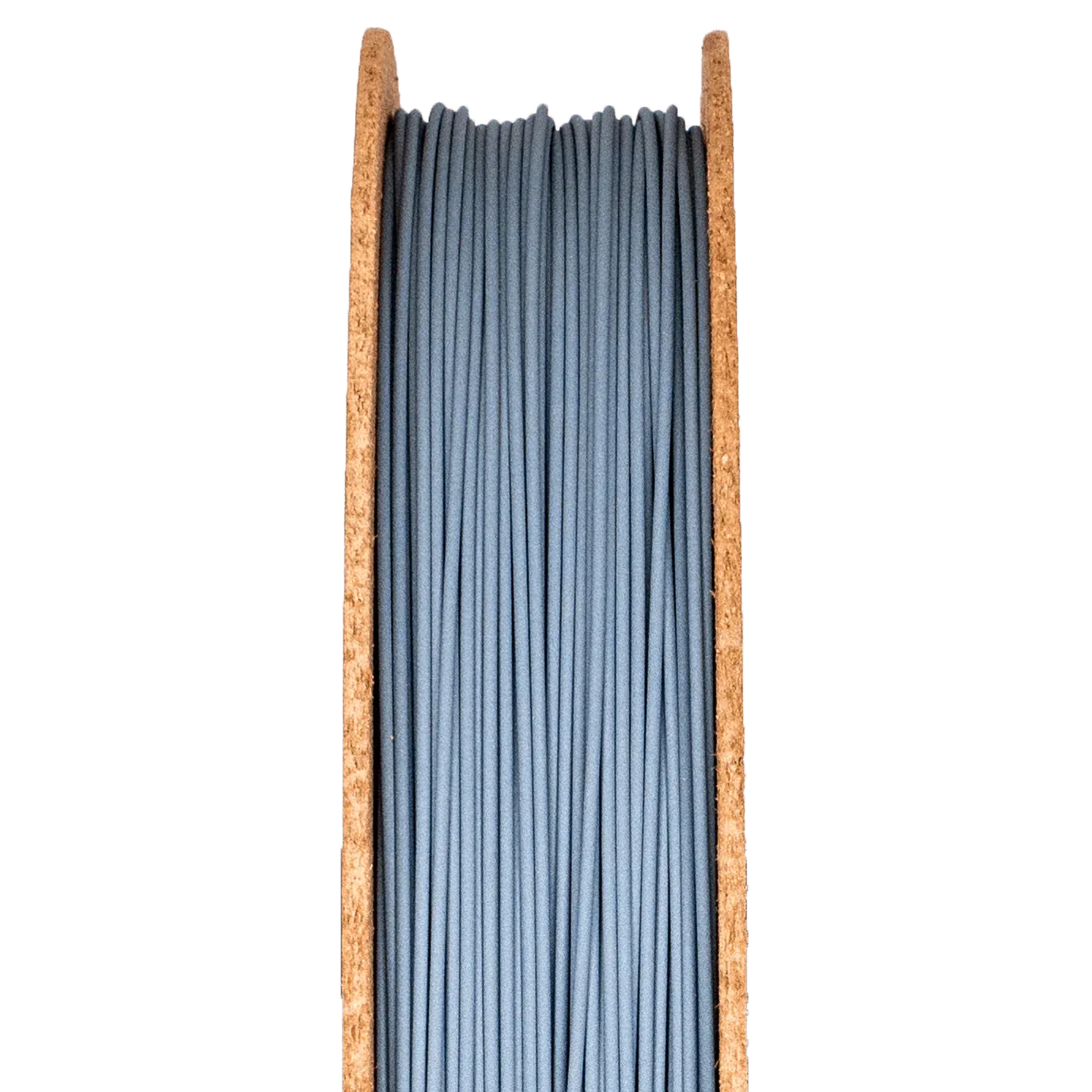
Silicon Carbide Ceramic Filamet™ — 1.75 mm, 0.5 kg
or 4 payments of $112.25 with
 Info
Info
Reseller, Corporate or Goverment Buyer?
Government and Education
3DPrintergear has been supplying government organisations with 3D printers, services and support since 2012. As an approved government customer you will automatically be entitled to 30-day terms with an official purchase order.
If you would like to create an account, please contact us on 1300 334 327, or at admin@3dprintergear.com.au
Resellers
Want to become a reseller?
3DPrintergear offers special pricing to genuine resellers. Once your application is approved, your new buying prices will be shown on our website after you login. To apply for a resellers account please contact us at admin@3dprintergear.com.au
Your Order Qualifies for Free Shipping! - FREE
Your order will be shipped by the most economical option, with online tracking. Delivery is usually 2-7 business days.
Free Pick-Up From Store - FREE
- Photo ID Required For All Pickup Orders
- Free pick-up from '781 High St, Reservoir VIC 3073', during opening hours
- Call Us 1300 334 327 if Urgently Required
- Express Dispatch
- Australian Owned & Operated
- Money Back Guarantee
- Quality Assured Products
An ultra-hard ceramic, now printable on a desktop FDM
Silicon Carbide Ceramic Filamet™ loads 63–68% SiC into a printable polymer carrier so any FDM printer with a hardened steel nozzle can extrude geometry that, after binder burnout, is silicon carbide ceramic. SiC is one of the hardest engineered ceramics ever produced — outranked only by a handful of materials including diamond and cubic boron nitride.
Industrial SiC powers cemented carbide tooling, abrasive media, microwave susceptors, semiconductor handling components, and thermally stable structural ceramics. With Filamet™ you can prototype in this material on your existing print farm — no powder bed, no slip casting, no green machining.
How it works — the 4-step process
Print on any FDM printer with a 0.6 mm hardened steel nozzle. SiC is highly abrasive — brass nozzles will not survive.
Pack
Nest the green part in alumina or graphite ballast inside an alumina crucible. SiC behaves well in inert/reducing burnout environments.
Sinter (R&D)
No published TVF sintering schedule yet — SiC sintering typically requires very high temperatures and atmosphere control. A custom recipe is required for fully dense parts.
Finish
Use green parts for fixtures and prototypes, or fired parts for hard-ceramic geometry. Diamond tooling is recommended for any post-fire machining.
Why silicon carbide
Among the hardest ceramics
SiC sits near the top of the hardness chart — the reason it dominates abrasive papers, cutting tools and wear-resistant components.
Microwave susceptor
Couples efficiently to microwave fields — widely used as a susceptor in microwave processing and as a heating element material.
Semiconductor-grade chemistry
SiC is the substrate of choice for high-power, high-temperature semiconductor devices — this filament shares the bulk chemistry.
High-temperature stability
Once sintered, SiC retains mechanical properties at temperatures where most metals creep or oxidise.
Geometry on demand
SiC is notoriously hard to shape after firing — printing the green part lets you build complex geometry before the ceramic ever hardens.
USA-made, fully supported
Manufactured in South Central Wisconsin by The Virtual Foundry. Direct technical support for research and development teams.
Recommended print settings
Specifications
Printing tips
- SiC is highly abrasive — hardened steel nozzle is mandatory
- Filawarmer recommended for prints over 4 hours
- Direct drive preferred — minimises filament path stress
- Document your sintering schedule — the community is small but active
Common applications
- Microwave susceptors and heating elements
- Cemented carbide tooling research geometry
- Abrasive tooling and wear-component prototypes
- Semiconductor process fixtures and handling
- High-temperature ceramic structural prototypes
- University and industrial materials research
What you can make


Frequently asked questions
What else you’ll need
TVF FireX Sintering Kiln
Programmable kiln suitable for ceramic sintering R&D — develop your own SiC schedule with full control.
Other Ceramic Filamets
Porcelain and zirconium silicate ship with proven schedules — useful baselines while you develop your SiC recipe.
Made in South Central Wisconsin, USA. World-class technical support provided for all TVF products.
(TVF-FILAMET-SIC-175)
| SKU | TVF-FILAMET-SIC-175 |
| Brand | The Virtual Foundry |
| Shipping Width | 0.220m |
| Shipping Height | 0.080m |
| Shipping Length | 0.220m |
Be The First To Review This Product!
Help other 3DPrintergear users shop smarter by writing reviews for products you have purchased.