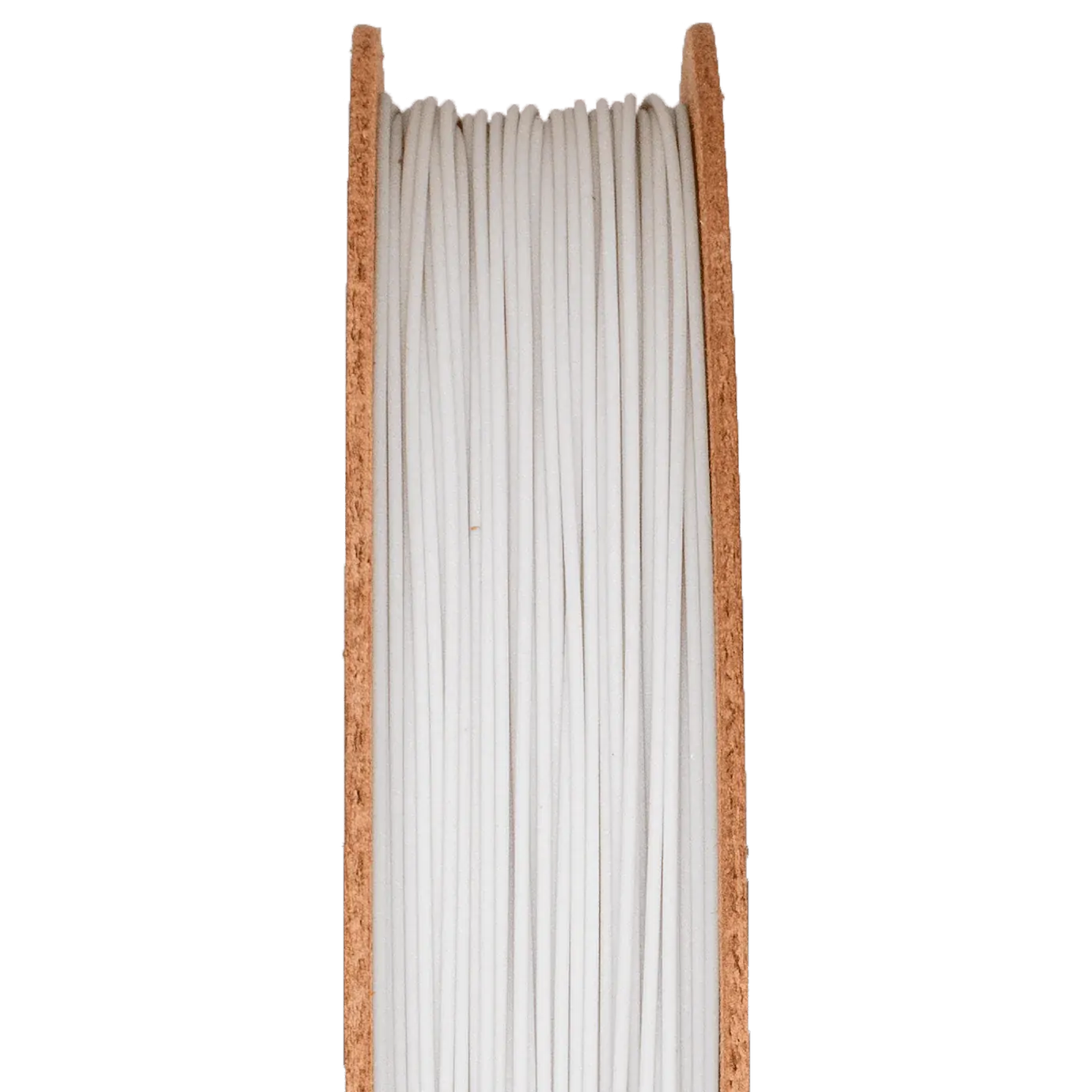
Pyrex® (Borosilicate) Glass Filamet™ — 1.75 mm, 0.5 kg
or 4 payments of $99.75 with
 Info
Info
Reseller, Corporate or Goverment Buyer?
Government and Education
3DPrintergear has been supplying government organisations with 3D printers, services and support since 2012. As an approved government customer you will automatically be entitled to 30-day terms with an official purchase order.
If you would like to create an account, please contact us on 1300 334 327, or at admin@3dprintergear.com.au
Resellers
Want to become a reseller?
3DPrintergear offers special pricing to genuine resellers. Once your application is approved, your new buying prices will be shown on our website after you login. To apply for a resellers account please contact us at admin@3dprintergear.com.au
Your Order Qualifies for Free Shipping! - FREE
Your order will be shipped by the most economical option, with online tracking. Delivery is usually 2-7 business days.
Free Pick-Up From Store - FREE
- Photo ID Required For All Pickup Orders
- Free pick-up from '781 High St, Reservoir VIC 3073', during opening hours
- Call Us 1300 334 327 if Urgently Required
- Express Dispatch
- Australian Owned & Operated
- Money Back Guarantee
- Quality Assured Products
Real borosilicate glass, printed on a desktop FDM printer
Pyrex® (Borosilicate) Glass Filamet™ is a 69–72% loaded borosilicate filament — the same low-expansion glass chemistry used in laboratory beakers, kitchen ovenware and optical research components. After kiln firing, the polymer binder burns out and the glass particles slump and fuse into genuine, translucent borosilicate.
Unlike TVF’s metal and ceramic Filamets, glass does not densify through powder sintering. Instead the glass softens, slumps under gravity and fuses with itself — a fundamentally different physical process. That changes how you design parts, support geometry and ramp the kiln.
How it works — the 4-step glass workflow
Print on any FDM printer fitted with a 0.8 mm hardened steel nozzle. Glass requires a larger nozzle than other Filamets — particle size demands it.
Pack & Support
Nest the green part in a refractory bed shaped to support the geometry through fusing. Unsupported overhangs will slump under gravity once the glass softens.
Fuse
Fire to ~820–850°C. The binder burns out and the borosilicate particles slump together and fuse — this is glass forming, not metal sintering.
Anneal & Finish
Slow-cool through the annealing range to relieve internal stress. Finished glass can be ground, polished or further worked with standard glassworking tools.
Why borosilicate glass
Genuine Pyrex®-grade chemistry
Low-expansion borosilicate — the same glass family used in lab beakers, oven dishes and reaction vessels. Thermal shock resistant by composition.
Translucent finish
Fired parts are translucent — not the opacity you get from metals or most ceramics. Excellent for optical research, light pipes and decorative work.
Chemically inert
Resistant to most acids, solvents and reagents. Ideal for prototype lab vessels, fluidic test rigs and chemistry-adjacent jigging apparatus.
Print — don’t blow
Skip the lampworking torch. Geometry that would take a glassblower hours becomes a slicer task you queue overnight.
Bonds with traditional glasswork
Printed borosilicate fuses to lampworked borosilicate. Use FDM for jigs, substrates and base shapes; finish with traditional glasswork.
USA-made, fully supported
Manufactured in South Central Wisconsin by The Virtual Foundry. Direct technical support from the team that makes the material.
Recommended print settings
Printing tips
- 0.8 mm hardened steel nozzle is mandatory — smaller will jam
- Direct drive strongly preferred for this stiffer filament
- Filawarmer strongly recommended — resets spool memory
- Design refractory supports for the kiln, not just printed supports
- Plan for slumping — tall, thin or unsupported features deform during fusing
Common applications
- Lab glassware prototypes — vessels, fittings, manifolds
- Jigging apparatus for shape-memory alloy development
- Optical research components and light pipes
- Decorative glass art and sculpture substrates
- Scientific instrumentation prototypes
- Lampworking jig substrates — FDM-print, then torch-finish
Specifications
What you can make


Frequently asked questions
What else you’ll need
TVF FireX Sintering Kiln
Programmable ramp control gets you cleanly into the borosilicate fusing and annealing ranges.
Filawarmer
Strongly recommended for Glass Filamet™. Resets spool memory and reduces snap risk on this stiffer filament.
Glass Filamet™ Sample Pack
Not ready for a full spool? Try 100 g of Pyrex® Glass Filamet™ first to validate your nozzle, kiln and fusing schedule.
Made in South Central Wisconsin, USA. World-class technical support provided for all TVF products.
(TVF-FILAMET-PYREX-175)
| SKU | TVF-FILAMET-PYREX-175 |
| Brand | The Virtual Foundry |
| Shipping Weight | 2.0000kg |
| Shipping Width | 0.220m |
| Shipping Height | 0.080m |
| Shipping Length | 0.220m |
Be The First To Review This Product!
Help other 3DPrintergear users shop smarter by writing reviews for products you have purchased.